A repertoire that remembers
Shostakovich’s quartets span more than three decades. Heard together, they reveal recurring gestures, silences and contrasts that acquire meaning through memory. An apparently simple phrase in one work can illuminate the emotional world of another written years later.
The cycle does not unfold as a straight line towards ever greater complexity. Moments of restraint can follow pages of extreme tension; irony can coexist with concentration, and a familiar musical gesture may return with a completely altered weight. The connections are rarely explanatory. They work more like echoes, asking the listener to remember a rhythm, an interval or a particular quality of silence.
For a quartet, this changes the nature of preparation. Each score must stand independently, but it must also remain connected to the wider journey. Tempi, colours and proportions are considered not only within a movement, but across the architecture of the cycle. The identity of every work has to remain clear while still belonging to the same long narrative.
Five concerts, one conversation
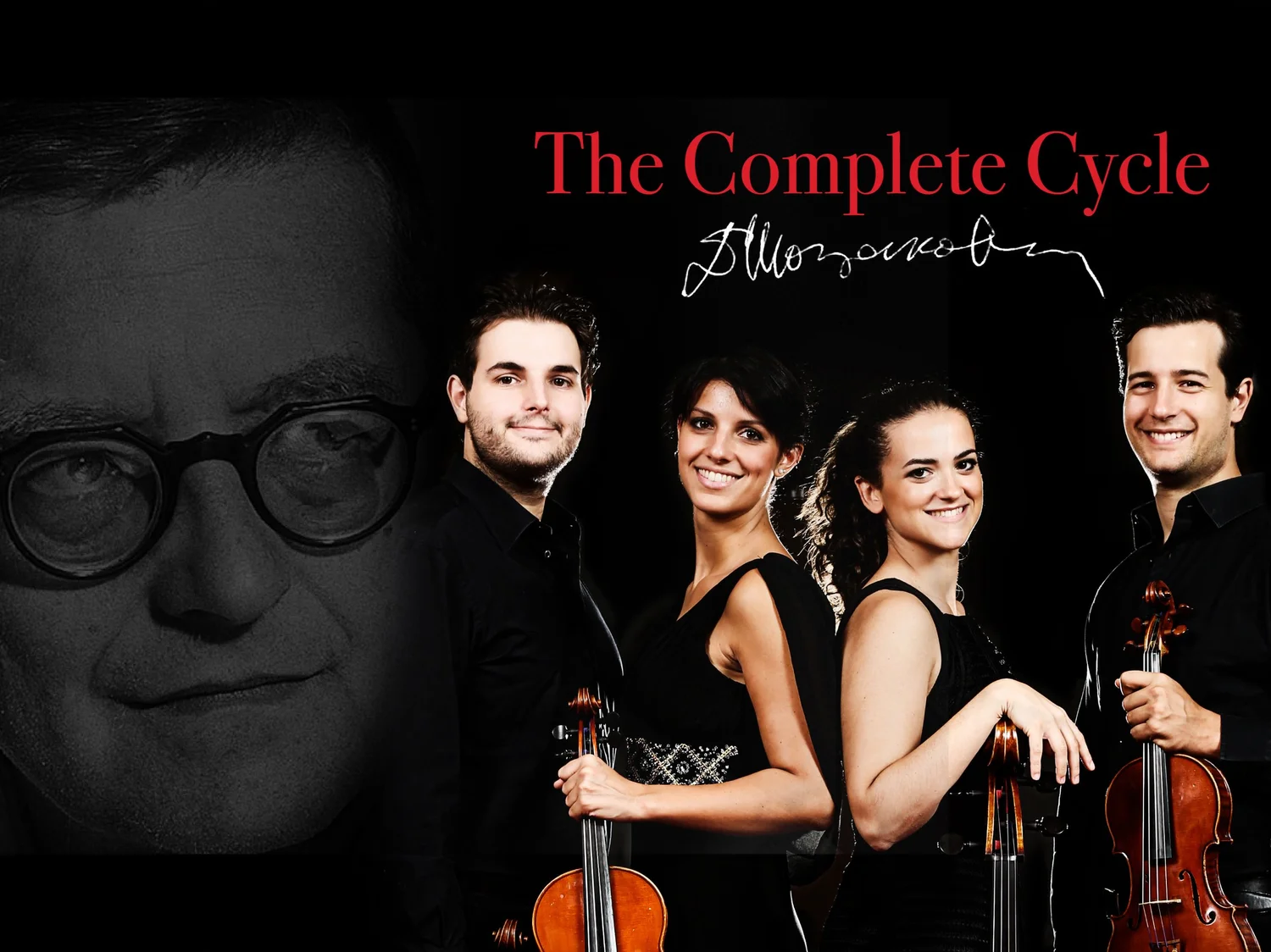
Our project presents all fifteen quartets in five concerts. The sequence allows different periods and emotional climates to speak to one another rather than treating the works as isolated monuments.
Dividing the cycle into five programmes also gives each concert its own internal profile. The task is to find a balance between continuity and contrast: a programme must be complete in itself, yet leave open a path towards the next encounter. The space between concerts becomes part of the experience, allowing themes and sonorities to settle in the listener’s memory.
The ambition is not to offer a definitive answer. It is to make the connections audible and to let the audience inhabit the cycle with us—encounter by encounter, question by question. A complete cycle is not a display of endurance; it is an invitation to remain close to one musical language long enough to notice how profoundly it can change.
The audience inside the cycle
Listening to the quartets over several evenings creates a relationship different from that of a single concert. Recognition becomes active: a sound heard earlier returns unexpectedly, while a new work can cast a different light on a previous one. The listener is not asked to know the cycle in advance, but simply to carry traces from one evening to the next.
This is why the project belongs as much to the concert hall as to the score. Acoustics, concentration and the shared time of performers and audience give the cycle its final shape. The fifteen quartets remain individual worlds, but together they reveal a larger arc that can only emerge through repeated listening.